

Longer Spans Without the Weight of a
Conventional Concrete Deck.
Exodermic grid decking combines a reinforced concrete riding surface with an unfilled steel grid to create a lightweight, efficient and high-performing composite bridge deck.
What Is Exodermic® Grid Decking?
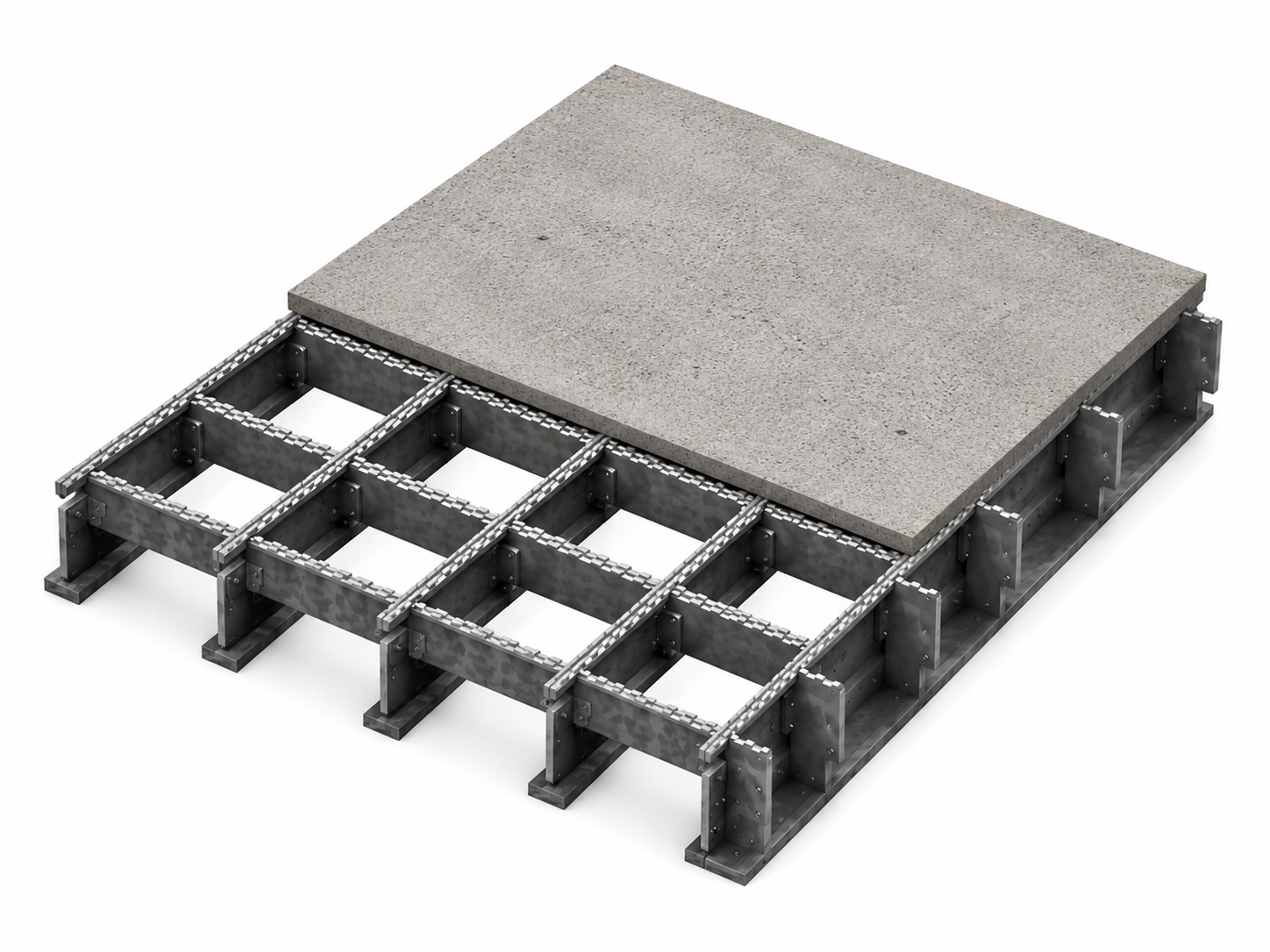
An Exodermic deck consists of a reinforced concrete slab positioned above an unfilled steel grid. The upper portion of the main bearing bars extends into the concrete, mechanically connecting the two materials.
The concrete primarily resists compression, while the steel grid resists tension. This composite action creates a strong and stiff bridge deck without requiring the full depth and weight of a conventional reinforced concrete slab.
Unlike half-filled and fully filled grid systems, most of the concrete is positioned above the grid's cross bars rather than filling the entire grid depth.
- 01Reinforced concrete slab
- 02Main bearing bars
- 03Cross bars
- 04Composite connection
- 05Unfilled lower grid
- 06Supporting floor beam or girder
Representative Industry Specifications
- Typical deck weight
- ≈ 39–74 lb/ft²
- Typical overall depth
- ≈ 6–9½ in
- Standard span capability
- > 18 ft in certain configurations
- Typical concrete slab thickness
- ≈ 4–4¼ in
- Main bearing-bar spacing
- 8, 10, or 12 in on center
- Cross-bar spacing
- ≈ 6 in on center
- Construction methods
- Precast panels or cast-in-place
- Riding surface
- Reinforced concrete w/ overlay options
Final weight, depth and span capacity depend on concrete strength, reinforcement, main bearing-bar size, grid spacing, floor-beam spacing, connections, loading requirements and project-specific engineering.
PDF · Representative industry ranges · Not project-specific engineering.
How Composite Action Works
Concrete and steel each carry the forces they resist best. Together they form a composite section that performs like a single, efficient structural element.
Traffic Loads Reach the Concrete Slab
The solid riding surface distributes wheel loads across the deck.
Concrete and Steel Work Together
The concrete resists compression while the steel grid resists tensile forces.
Loads Transfer to the Supporting Structure
The composite deck transfers loads efficiently to the bridge's floor beams or girders.
Why Use Exodermic®?
Longer Span Capability
The efficient composite section can span farther than many traditional filled-grid deck systems.
Reduced Structural Weight
Exodermic decks can provide major weight savings compared with conventional reinforced concrete bridge decks.
Solid Riding Surface
The reinforced concrete surface provides drivers with a familiar, smooth roadway experience.
Accelerated Construction
The system can be fabricated as precast panels or installed using cast-in-place concrete.
Potential Floor-System Simplification
Longer spans may allow engineers to reduce or remove some stringers and supporting members.
Stay-in-Place Forming
The steel grid supports the concrete placement and can reduce temporary forming requirements.

Designed for Long Spans and Weight-Sensitive Structures
- Long spans between floor beams
- Steel truss bridge rehabilitation
- Suspension bridge rehabilitation
- Movable bridges requiring a solid roadway
- Bridges with strict dead-load limitations
- Accelerated bridge construction
- Precast deck-panel replacement
- Staged construction under traffic
- Projects seeking to reduce stringers
- Complex bridge rehabilitation projects
Exodermic is often selected when a bridge needs the ride quality of concrete, the weight efficiency of steel grid, and greater span capability than conventional filled-grid systems.
Coordinate Early. Install Efficiently.
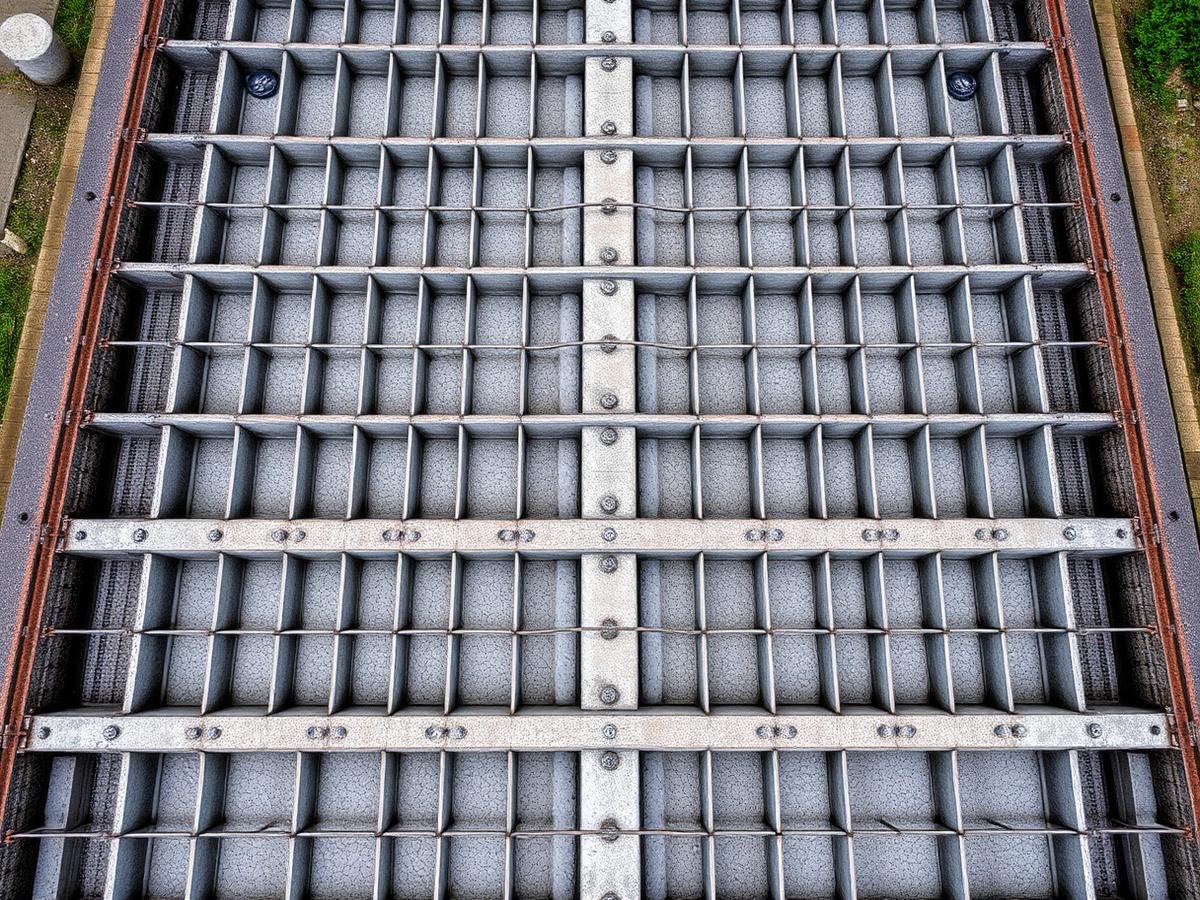
Exodermic deck design requires coordination between the slab reinforcement, grid geometry, panel connections, closure placements, haunches, shear studs and supporting structure.
For precast systems, panel size may be influenced by shipping limits, erection equipment, galvanizing capacity and site access. These factors should be evaluated early in the design process.
Is Exodermic Right for Your Project?
Does the bridge require a solid concrete riding surface?
Is reducing dead load important?
Are longer spans between floor beams needed?
Would accelerated installation reduce traffic disruption?
Exodermic decking may be the right choice when structural efficiency, long-span capability and construction speed must work together.
Span Farther. Install Faster. Reduce Weight.
Work with MCS to evaluate an Exodermic grid system based on your bridge geometry, loading, installation plan and long-term performance requirements.