
Grid Systems for Rehabilitation, Replacement & Specialized Applications
Explore configurations designed to balance structural weight, installation requirements, riding surface, drainage, durability, and lifecycle goals.
Compare Grid Configurations
Language below reflects considerations commonly evaluated during system selection. Final configuration depends on approved design, project conditions, and installation strategy.
- Relative dead load
- Lowest
- Riding surface
- Open steel
- Drainage
- Full through-deck
- Installation
- Panelized, rapid
- Movable bridges
- Commonly considered
- Traffic type
- Highway / movable
- Relative dead load
- Low – Moderate
- Riding surface
- Concrete + steel bars
- Drainage
- Partial
- Installation
- Panelized + field fill
- Movable bridges
- Case-by-case
- Traffic type
- Highway
- Relative dead load
- Moderate
- Riding surface
- Full concrete
- Drainage
- Surface drainage
- Installation
- Panelized + field fill
- Movable bridges
- Rarely
- Traffic type
- Highway
- Relative dead load
- Moderate
- Riding surface
- Concrete overlay
- Drainage
- Surface drainage
- Installation
- Panelized + overlay
- Movable bridges
- Case-by-case
- Traffic type
- Highway
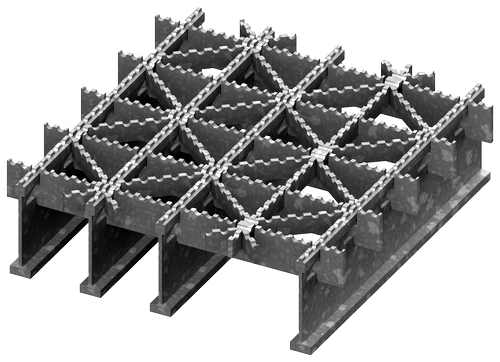
Open Grid
Open grid decking is a lightweight, high-strength steel deck system commonly considered for rehabilitation projects where dead-load reduction, drainage, and rapid installation are project priorities.
Rehabilitation and movable bridges where minimizing structural weight is critical.
- ›Lowest relative dead load
- ›Excellent drainage
- ›Rapid panel installation
- ›Suitable for movable bridges
- ›Requires appropriate riding-surface strategy
- ›Skid-resistance detailing per project spec
- ›Coordinated with approved traffic plan
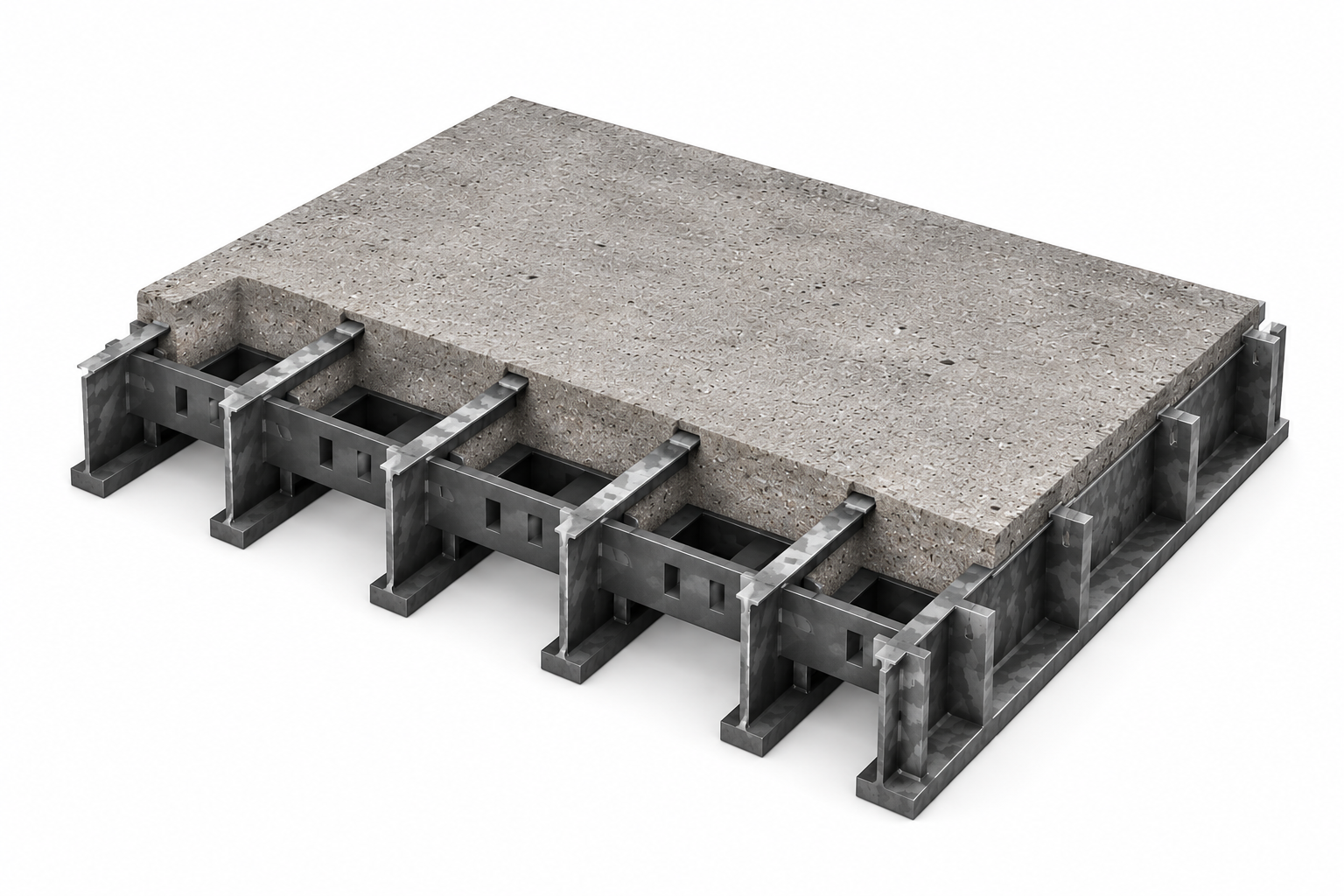
Half-Filled Grid
Half-filled grid systems combine the weight benefits of open grid with an improved riding surface, often selected where a smoother wearing surface is preferred without a full concrete fill.
Highway rehabilitations that need improved ride quality with moderate weight savings.
- ›Improved riding surface vs. open grid
- ›Reduced dead load vs. full concrete deck
- ›Compatible with rehabilitation strategies
- ›Fill depth coordinated with approved design
- ›Requires field concrete placement
- ›Drainage detailing per project
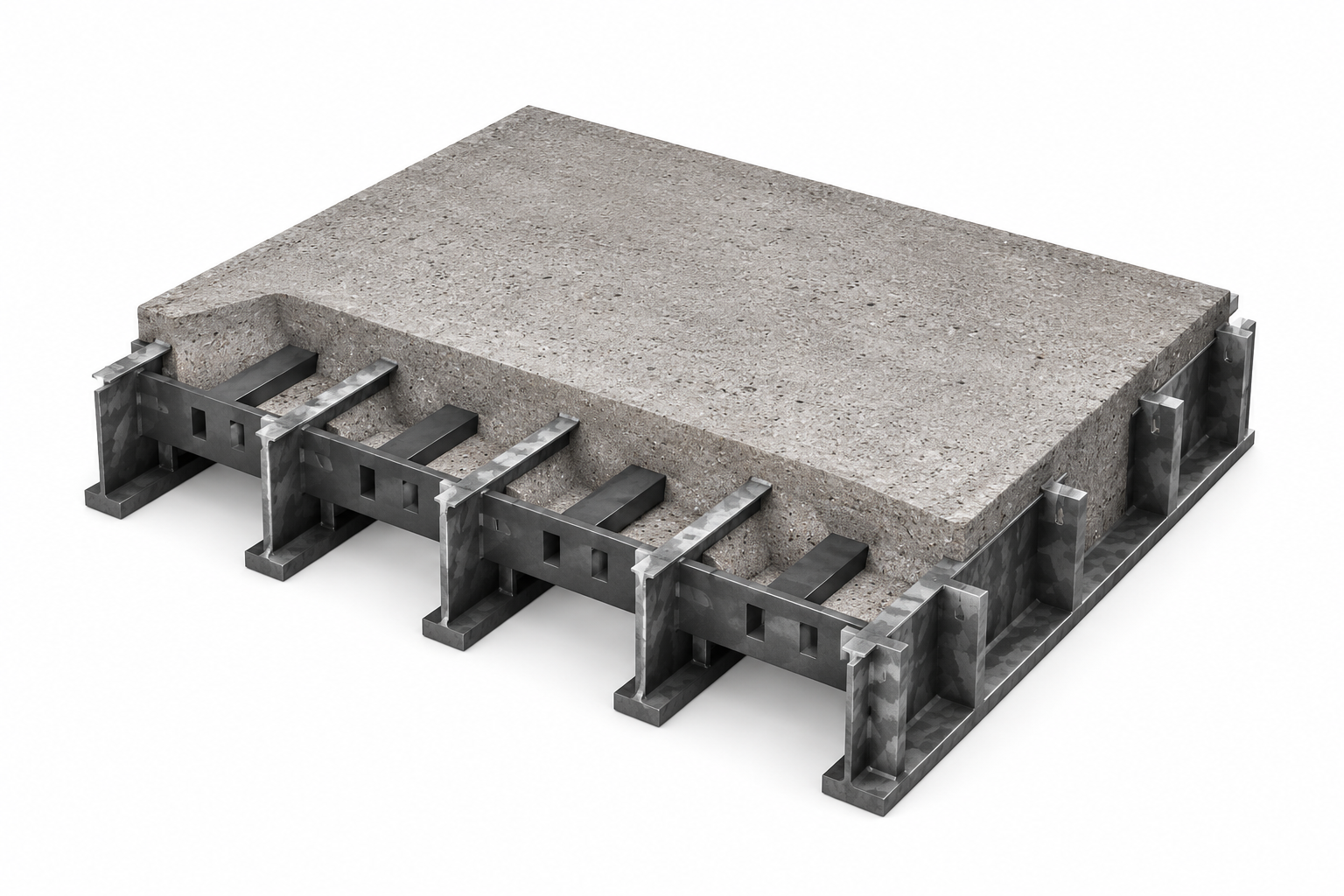
Fully Filled Grid
Fully filled grid provides a continuous concrete riding surface with the composite strength of the steel grid, commonly considered where a conventional wearing surface is required with reduced dead load compared with a full-depth reinforced concrete deck.
Highway rehabilitations requiring a full concrete wearing surface with weight savings.
- ›Continuous concrete riding surface
- ›Composite performance with steel grid
- ›Reduced dead load vs. conventional deck
- ›Composite detailing per approved design
- ›Field placement scheduling
- ›Coordinated with barrier and joint details
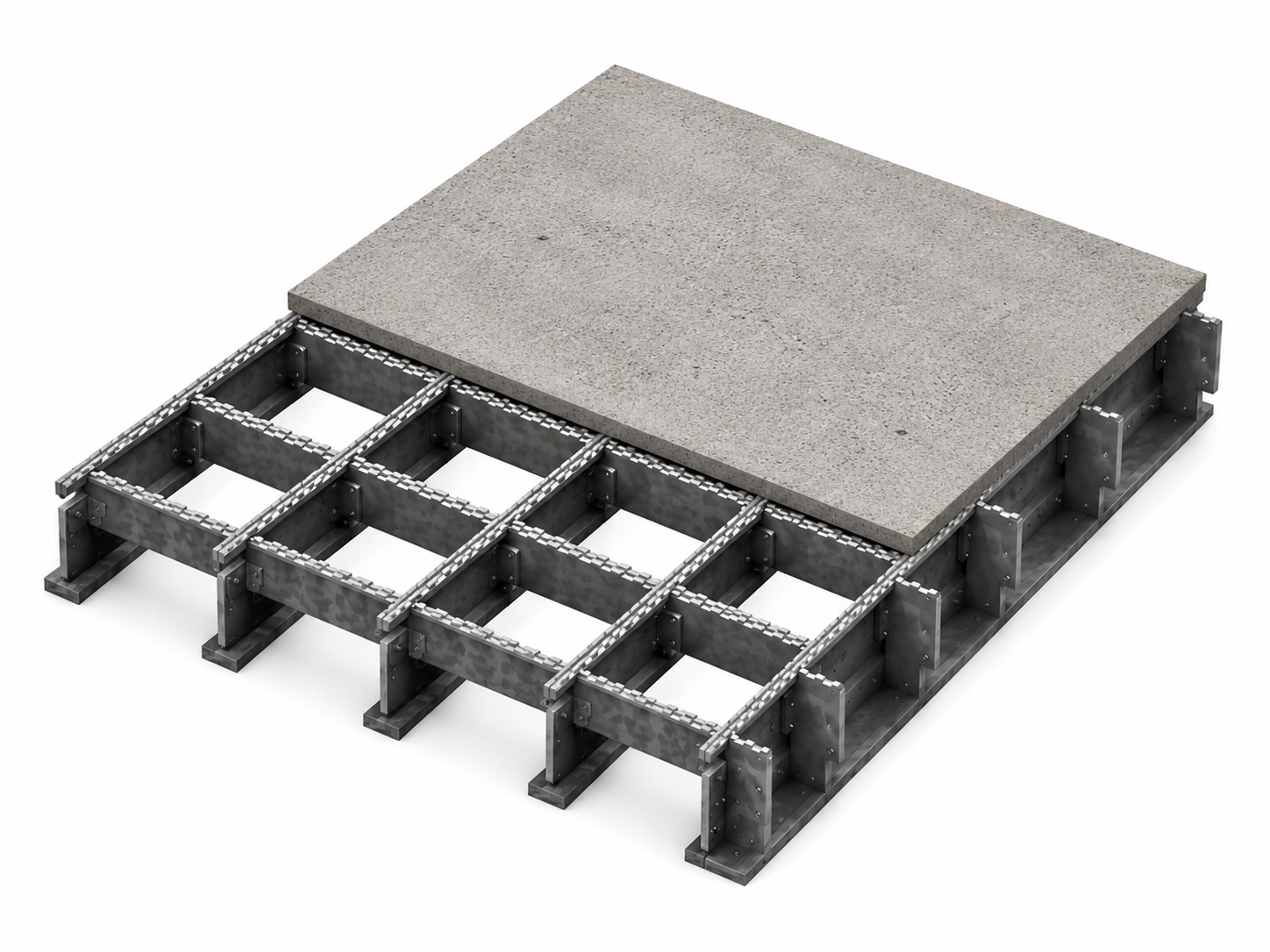
Exodermic Grid
Exodermic-style deck systems combine an unfilled steel grid with a reinforced concrete overlay, engineered to act compositely. Commonly considered where structural efficiency, riding surface, and dead-load control are project priorities.
Rehabilitations balancing dead-load reduction with a full concrete wearing surface.
- ›Composite structural efficiency
- ›Full concrete riding surface
- ›Weight savings vs. conventional deck
- ›Composite detailing per approved design
- ›Overlay thickness per project
- ›Shear connector coordination
Configured Around Approved Project Requirements
MCS fabricates panel dimensions, bearing-bar arrangements, and connection details in coordination with the approved structural design. We support shop drawing preparation, modular panel strategies, and integration with project-specific installation plans.
MCS does not provide complete bridge design. Final structural design responsibility remains with the engineer of record unless established through a separate written scope.
Discuss Custom Requirements