

Why Bridge Grid Continues to Matter
A flexible deck option when weight, installation time, drainage, and service life all have to be balanced.
The Rehabilitation Pressure on U.S. Bridges
Roughly one in three bridges in the national inventory is rated fair or poor, and the windows available to work on them keep getting tighter.
Aging inventory, funding pressure, and traffic disruption all shape how bridges are rehabilitated today. Figures per the ARTBA Bridge Report and the FHWA National Bridge Inventory.
How a Grid Deck Is Put Together
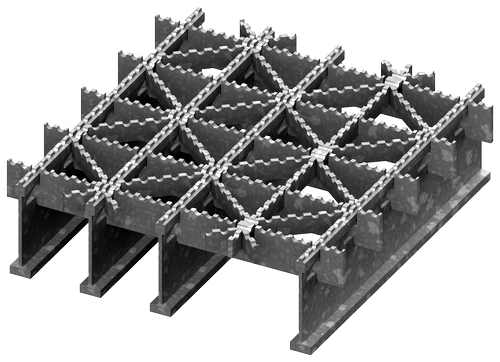
A grid deck is a framework of steel bars welded into panels and fabricated to project-specific dimensions in the shop. Because the deck arrives as finished modules instead of being formed and poured in place, most of the work that would otherwise happen over live traffic or open water moves indoors.
- Main Bearing Bars
- Run in the direction of the span and carry wheel loads into the stringers or floorbeams beneath the deck.
- Cross Bars
- Tie the bearing bars together, share load between them, and help form the riding surface.
- Supplemental & Diagonal Bars
- Added on certain systems to refine load distribution and stiffen the panel between bearing bars.
- Concrete Fill (Optional)
- Partial or full fill creates a smoother wearing surface and, on composite systems, works with the steel.
Where Bridge Grid Can Support the Project
Grid is a strong option on a specific set of projects, and the wrong option on others. Knowing which is which early saves everyone time.
Grid Tends to Fit When
- Existing superstructure or substructure capacity limits how much deck weight can be added.
- Closure windows are short and work over live traffic or open water must be minimized.
- The bridge is movable and counterweight or balance is a governing constraint.
- Through-deck drainage is desirable or required.
- The deck geometry is irregular and panels can be fabricated to fit.
Other Deck Types May Fit Better When
- Dead load is not constrained and lowest first cost governs the decision.
- The project already has an approved cast-in-place detail and no schedule pressure.
- Field conditions allow long closures and staged pours without disruption cost.
- Owner standards specify a deck type that does not include grid.
Straight Answers to Common Questions
Per square foot, yes, steel grid carries a higher material and fabrication cost. We say that plainly. The comparison that matters is total installed cost, where reduced field labor, shorter closures, less traffic control, and avoided superstructure strengthening frequently close or reverse the gap. On weight-constrained bridges, grid is sometimes the only option that keeps the existing structure in service.
It depends on the system and the fill. Open grid is the lightest, half-filled adds a wearing surface at moderate weight, and fully filled or composite systems trade some of the savings for a full concrete riding surface. Actual numbers come out of the panel design for your span and loading, which is where our engineering support starts.
Yes. Movable spans, ferry ramps, and lift structures are long-standing applications, because balance and counterweight limits make deck weight a governing constraint.
Open systems use serrated or otherwise treated bar surfaces; filled systems provide a concrete wearing surface. The right approach is set by the owner's specification and the traffic on the bridge.
Service life depends on the system, the coating or galvanizing, the traffic, and the maintenance program. Galvanized steel grid is used specifically where long service life and corrosion resistance are priorities.
No. The same panels are used for industrial trench covers, transfer-station and plant floors, ports, and other heavy-duty surfaces where load distribution and drainage matter.
Grid Deck vs. Cast-in-Place Concrete
Steel grid usually costs more per square foot than a concrete deck. We would rather put that in front of you than bury it. The trade is field labor, closure time, and structural weight, which is where the money often comes back.
| Factor | Steel Bridge Grid | Cast-in-Place Concrete |
|---|---|---|
| Deck Weight | Substantially lighter than a conventional reinforced-concrete deck; open systems are the lightest. | Heaviest option; added dead load can drive strengthening of members below. |
| Field Work | Panels arrive finished; field work is setting, connecting, and finishing. | Forming, placing reinforcement, pouring, and curing all happen on the bridge. |
| Closure Duration | Shorter closure windows, often staged lane by lane or night by night. | Longer closures driven by cure time and staging. |
| First Cost | Higher material and fabrication cost per square foot. | Lower material cost per square foot. |
| Total Project Cost | Reduced field labor, shorter closures, and avoided strengthening can offset the material premium. | More field labor and longer traffic impacts, which carry their own cost. |
| Drainage | Open and half-filled systems drain through the deck. | Surface drainage handled by crown, scuppers, and inlets. |
Bridge grid is not the cheap option. It is the option that buys weight savings, a shorter closure, and a long service life. When those matter on your project, it is usually the right call, and when they do not, we will tell you that too.
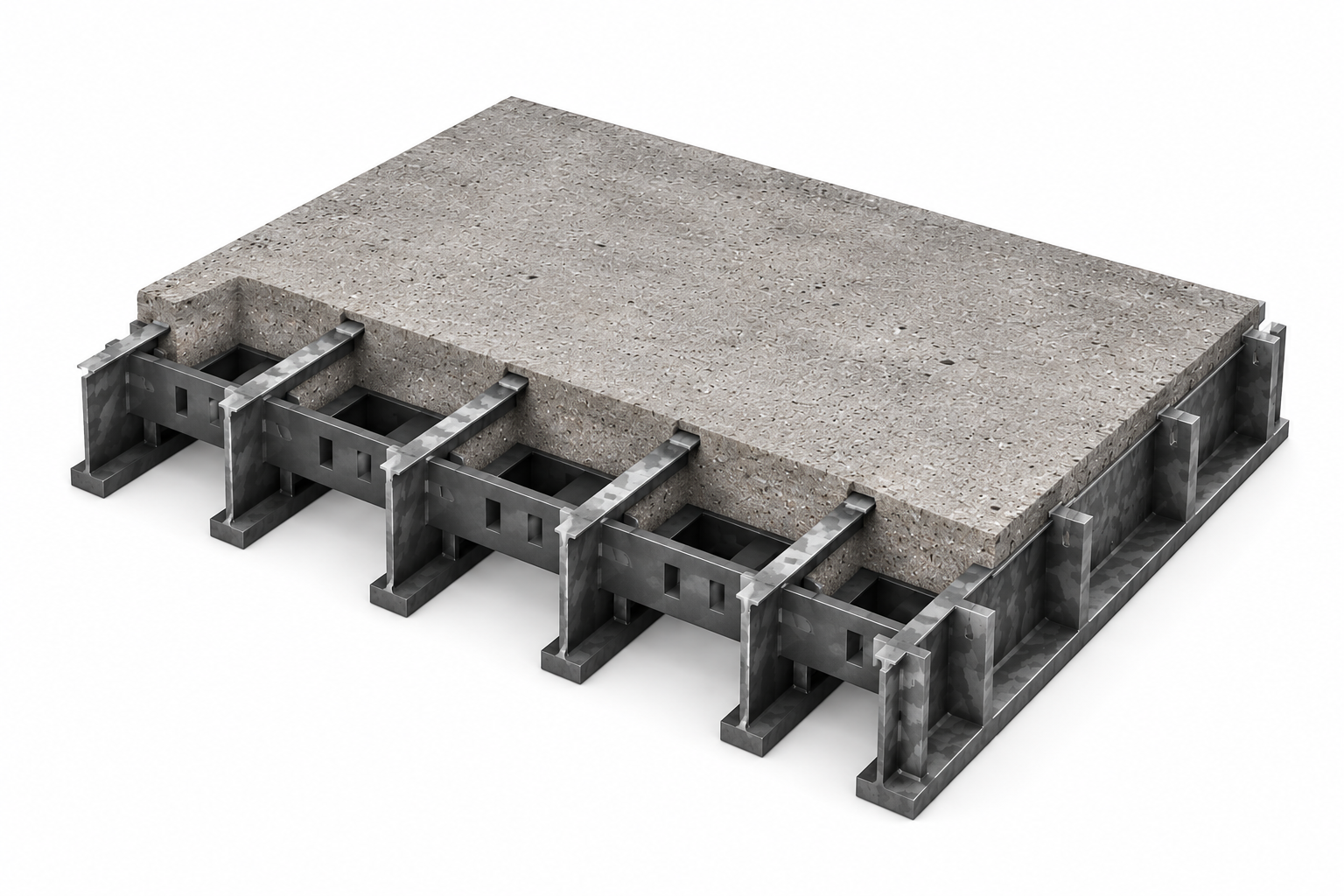
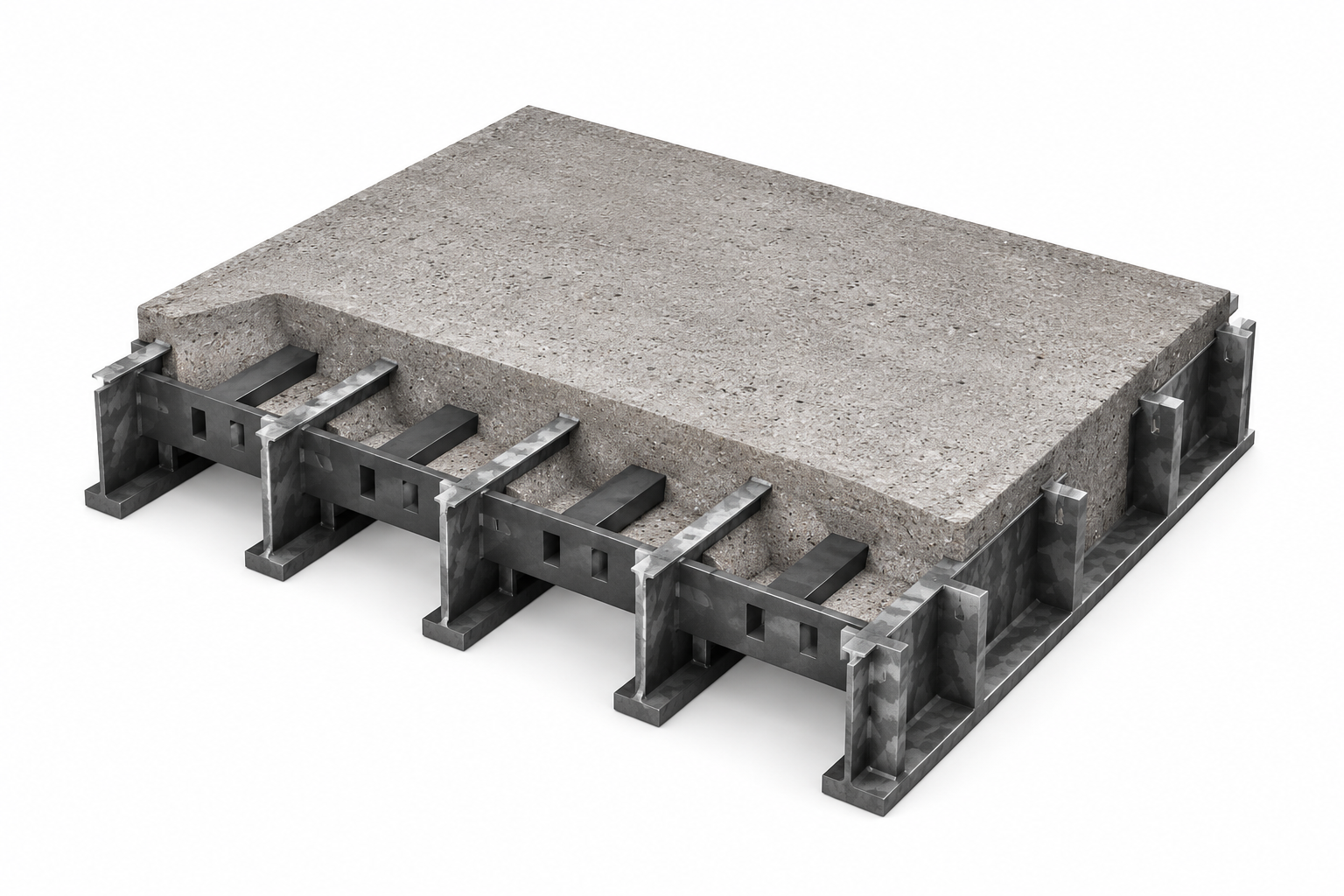
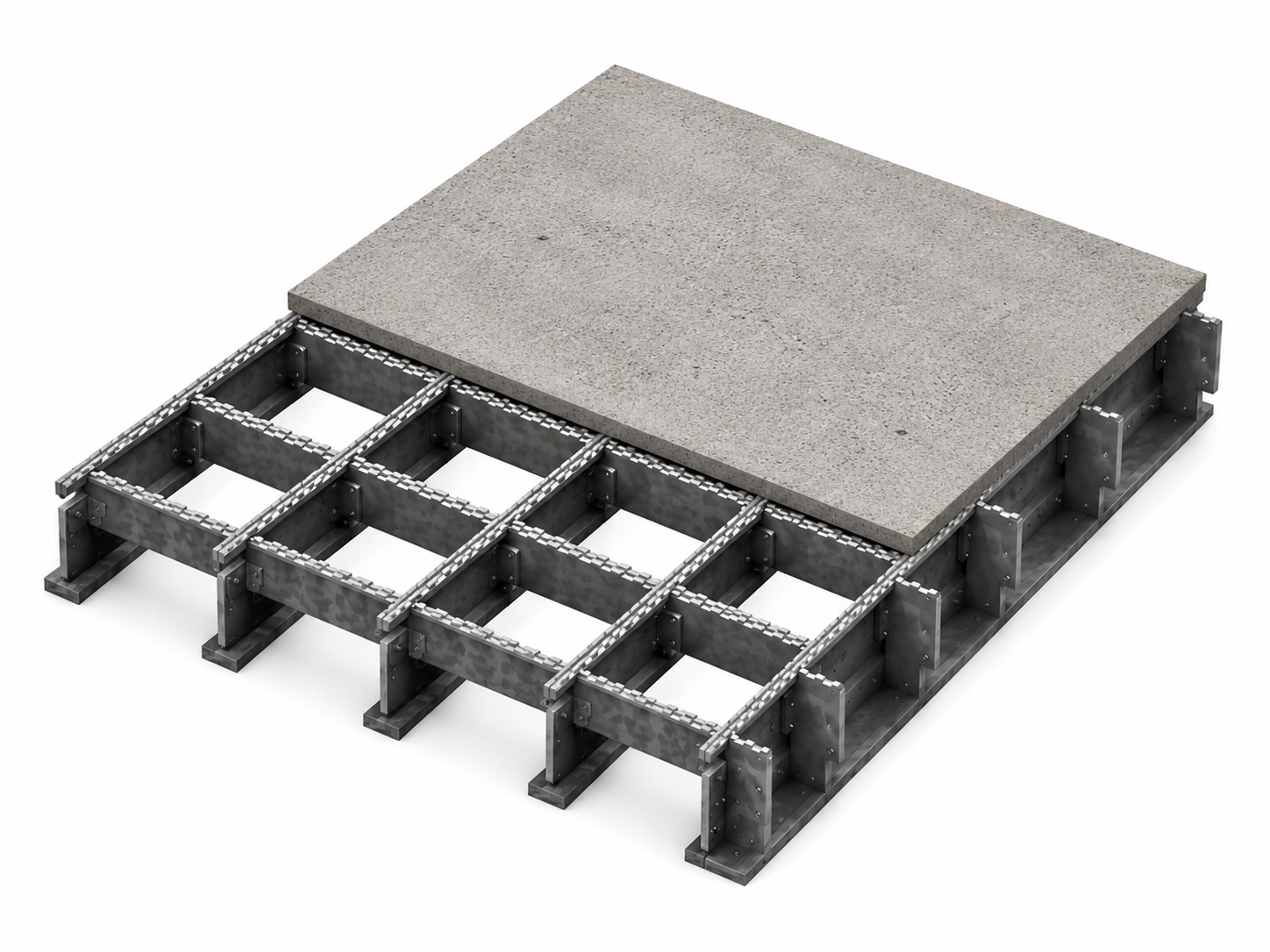
Four Systems, Different Trade-Offs
Weight, riding surface, and drainage move together. Each system sits at a different point on that curve.
How to Evaluate Grid on Your Project
Five questions settle most deck decisions. Work through them and the answer is usually obvious before anyone prices a panel.
- 01
Confirm the Weight Budget
Start with the load rating and what the existing structure can carry. That number usually narrows the deck options faster than anything else.
- 02
Define the Closure Window
How long the bridge can be out of service, and in what stages, shapes both the panel layout and the connection details.
- 03
Choose the Riding Surface
Open steel, partial fill, full fill, or a composite deck each carry different surface, noise, and skid-resistance considerations.
- 04
Check Owner Requirements
State DOT approvals, qualified-fabricator status, galvanizing, and submittal expectations all belong in the decision early.
- 05
Price the Whole Job
Compare material, field labor, traffic control, and any strengthening avoided, not material alone.
Go Deeper
Longer-form technical reading from our library, plus the outside sources we rely on rather than making unsupported claims.
An introduction to steel bridge grid decking, common configurations, and where each is commonly considered.
A side-by-side look at open, half-filled, fully filled, and exodermic-style grid deck systems.
A brief history of the bridge-grid business and the manufacturing knowledge carried forward within MCS.
Key considerations when planning a bridge-deck rehabilitation project.