
The Balanced Choice for
Weight, Ride & Performance.
Half-filled grid decking combines a lightweight steel grid with a solid concrete riding surface, delivering meaningful dead-load reduction without sacrificing roadway comfort.
What Is Half-Filled Grid Decking?
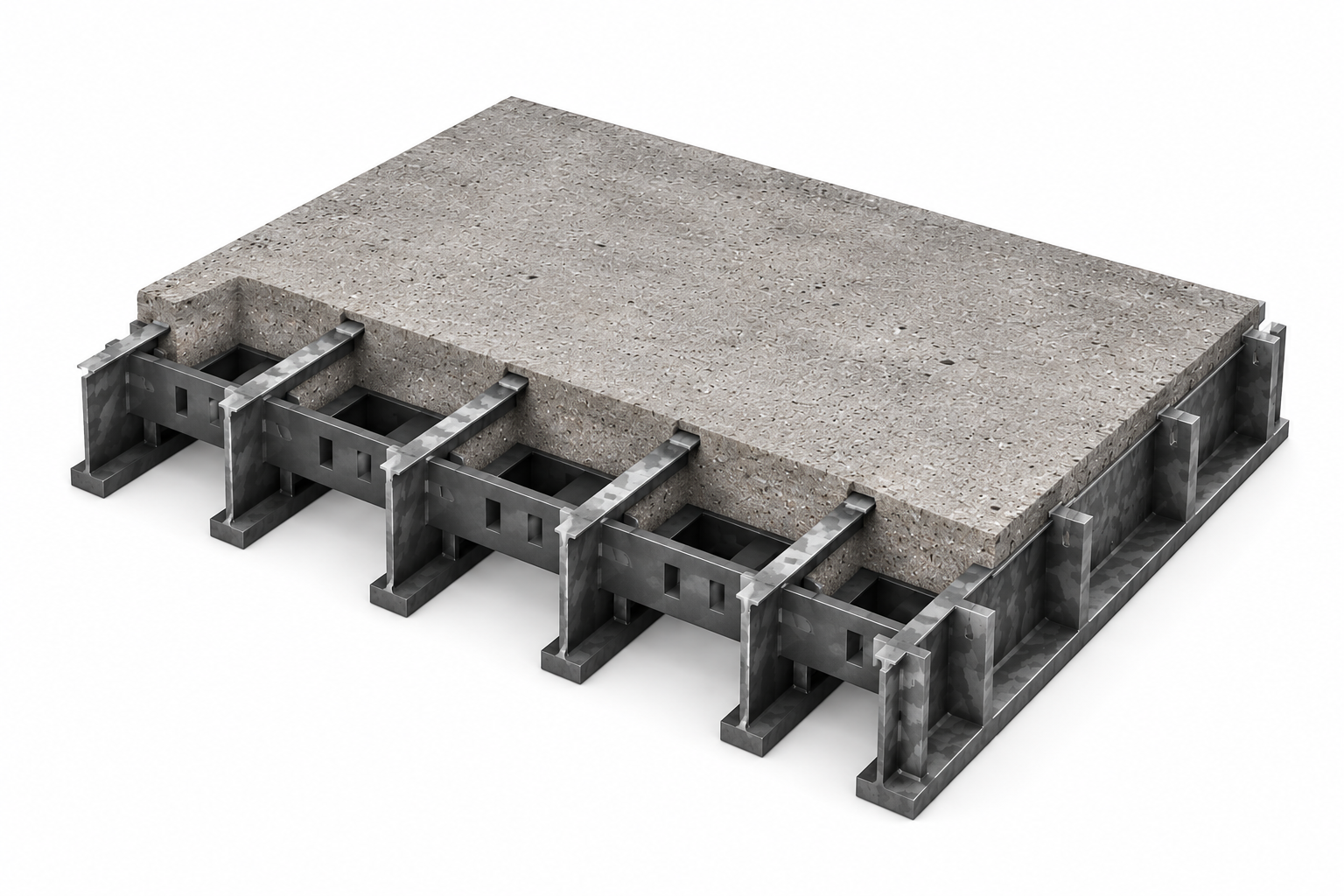
Half-filled grid decking is a steel grid system in which concrete occupies approximately the upper half of the grid depth. Form pans positioned within the grid support the concrete while the lower portion remains unfilled.
The deck may be finished near the top of the grid, but a concrete overfill is commonly added above the steel. This overfill improves ride quality, provides additional concrete cover and can contribute to the deck's structural performance.
- 01Concrete overfill
- 02Upper concrete-filled area
- 03Main bearing bars
- 04Cross bars
- 05Form pans
- 06Unfilled lower grid
- 07Supporting girder / floor beam
Half-Filled & Overfill Models
Tap a model to see its section properties, spans and weight. Switch to the table to compare them side by side.
Representative values from the MCS Fabricated Bridge Products booklet. Open grid section modulus based on 50% of diagonal bars active. Actual weight and capacity vary with project specifications and must be confirmed by project engineering.
Representative Industry Specifications
- Typical deck weight
- ≈ 46–66 lb/ft²
- 5-in system w/ NW concrete + overfill
- ≈ 60–66 lb/ft²
- Typical steel grid depth
- ≈ 5 in
- Typical concrete overfill
- ≈ 1½–2 in
- Representative clear span
- ≈ 4.8–10.1 ft
- Main bearing-bar spacing
- ≈ 6–10 in on center
- Typical cross-bar spacing
- ≈ 4 in on center
- Construction methods
- Precast or cast-in-place
- Composite connections
- Shear studs • Concrete haunches
Deck weight and capacity vary based on concrete density, overfill thickness, bar spacing, steel grade, span, loading, connections and project requirements. Final specifications must be confirmed through project-specific engineering.
PDF · Representative industry ranges · Not project-specific engineering.
Understanding the Weight Advantage
Half-filled grid sits between the lightest steel systems and the heaviest concrete decks, trading some weight for a solid concrete roadway.
Actual weights vary by structural configuration, concrete density, span and project design.
Why Use Half-Filled Grid?
Balanced Deck Weight
Half-filled grid is lighter than fully filled grid while still providing a solid roadway surface.
Improved Ride Quality
The concrete surface creates a quieter and more familiar driving experience than open steel grid.
Reduced Dead Load
The unfilled lower portion reduces the total amount of concrete carried by the structure.
Flexible Installation
The system can be fabricated as precast panels or completed using cast-in-place concrete.
Accelerated Bridge Construction
Shop-fabricated panels can reduce field labor and shorten roadway closures.
Adaptable Geometry
Accommodates crowns, cross slopes, superelevation and project-specific bridge geometry.
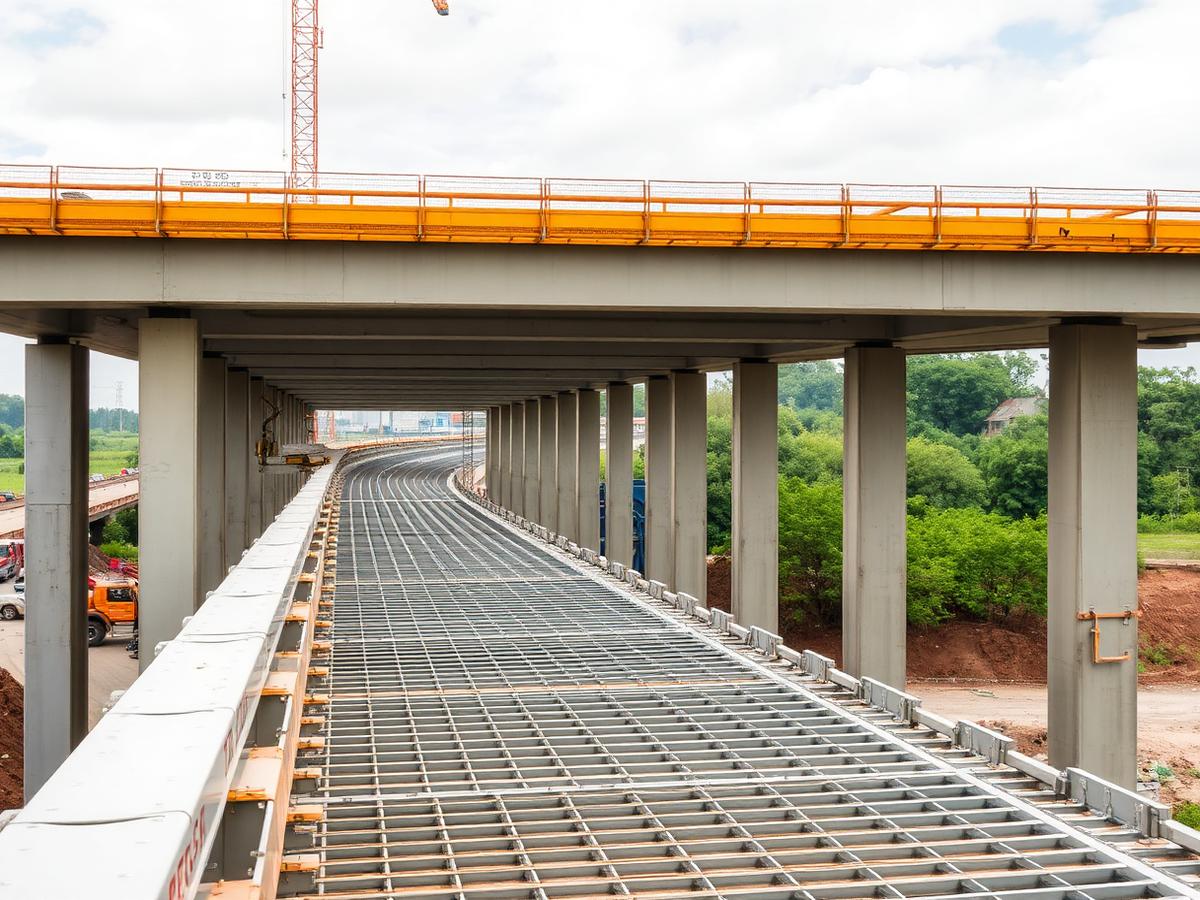
A Versatile System for Rehab & Replacement
- Movable bridges requiring a solid roadway
- Steel truss bridges
- Bridges with moderate dead-load restrictions
- Replacement of existing filled-grid decks
- Accelerated bridge construction
- Precast deck-panel projects
- Fixed highway bridges
- Rehabilitation under staged traffic
- Balance of weight, ride quality and cost
Half-filled grid is often the practical middle ground between the minimal weight of open grid and the robust concrete integration of a fully filled system.
Tune the System to the Structure.
Concrete density and overfill thickness have a major effect on the finished deck weight. Lightweight concrete can reduce the dead load further, while additional concrete cover can improve long-term protection and provide a sacrificial wearing surface.
The design team should also evaluate drainage, reinforcement, panel joints, composite connections, deck geometry, concrete placement and long-term maintenance requirements.
Is Half-Filled Grid Right for Your Project?
Is a solid concrete riding surface required?
Does the bridge have moderate weight limitations?
Would precast panels or accelerated installation benefit the project?
Is the project seeking a balance between weight, cost and durability?
Half-filled grid may be the right solution when the project needs meaningful weight savings without moving to an open steel riding surface.
Find the Right Balance for Your Bridge.
MCS can help your project team evaluate grid dimensions, panel layouts, overfill requirements and fabrication considerations for a half-filled grid deck.