
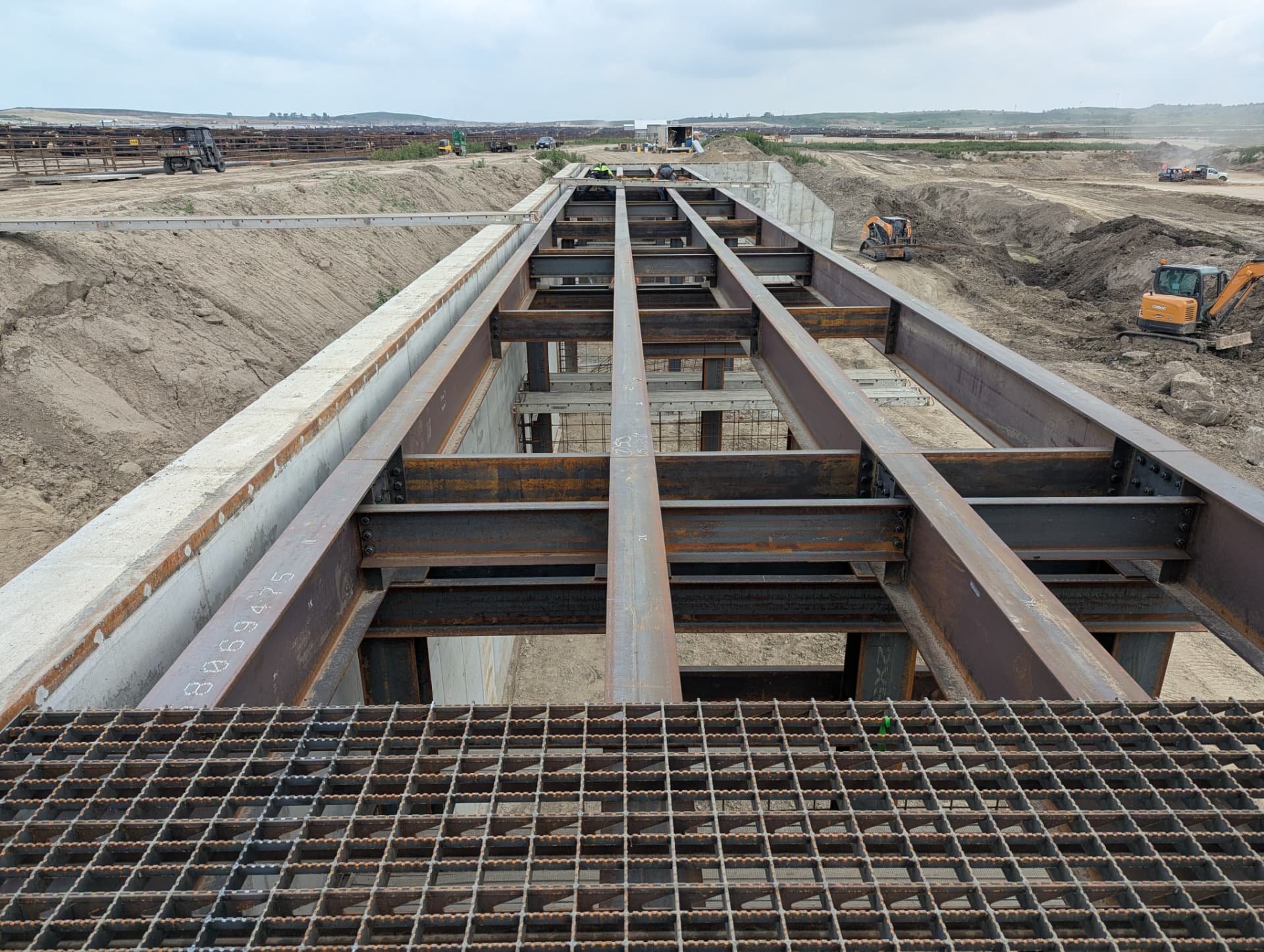
How prefabricated grid systems can support accelerated construction strategies.
Prefabricated bridge grid can support accelerated construction goals through modular panels, coordinated deliveries, and reduced field labor.
What accelerated bridge construction is asking for
Accelerated bridge construction is not a product. It is a decision to move work off the bridge and out of the traffic stream, to fabricate away from the site, shorten the on-site sequence, and give the public a closure measured in days or weekends rather than seasons.
Prefabricated bridge grid fits that logic directly. The deck arrives as finished panels, so the slowest field activities of a conventional deck replacement, forming, placing reinforcement, pouring, and curing over live traffic or water, either shrink or disappear.
Where the time is actually saved
- Forming and falsework are largely eliminated for unfilled systems
- Concrete cure time comes off the critical path when the fill is placed in the shop or omitted entirely
- Deck area is covered in panel-sized increments rather than pour-sized ones
- Fewer crews and trades are working simultaneously in a constrained work zone
- Panel layouts can be organized so each shift ends with the deck in a stable, openable condition
Staging strategies grid supports well
Weekend and night closures: panels sized so that a defined set can be placed, connected, and opened to traffic within a single window, then repeated the following weekend.
Half-width or lane-by-lane staging: the deck is split along a longitudinal line, with panel layouts, temporary edge conditions, and the joint between stages detailed in advance rather than improvised.
Rapid replacement on movable spans: reduced deck weight limits the rebalancing work and lets the span be returned to operation sooner.
What has to be decided early
An accelerated schedule succeeds or fails during detailing, not during installation. The decisions that matter are made months before the closure.
- Panel sizes reconciled with crane capacity, reach, and available laydown area
- Delivery sequence matched to the placement order, with a plan for where trucks stage
- Connection details that can be made quickly and inspected in the dark
- Interface details at curbs, barriers, joints, and stage lines resolved on paper
- Field-adjustment allowances for existing structures that are rarely exactly as-built
- Submittal and approval durations built into the schedule honestly
What ABC does not remove
Prefabrication moves risk rather than deleting it. Shop lead time, galvanizing turnaround, and approval cycles all sit ahead of the closure and cannot be compressed at the last minute. Existing-condition surprises still occur, which is why field verification and a documented adjustment approach matter more on an accelerated job than a conventional one.
Bringing the manufacturer in during design rather than after bid is the single most effective way to make an accelerated grid schedule realistic. If you are planning a closure-constrained replacement, send the drawings and the intended staging concept and we will tell you what fabrication and delivery can support.
Need project-specific guidance on this topic? The MCS bridge team can walk through details, drawings, and options for your structure, call (814) 497-5001.