
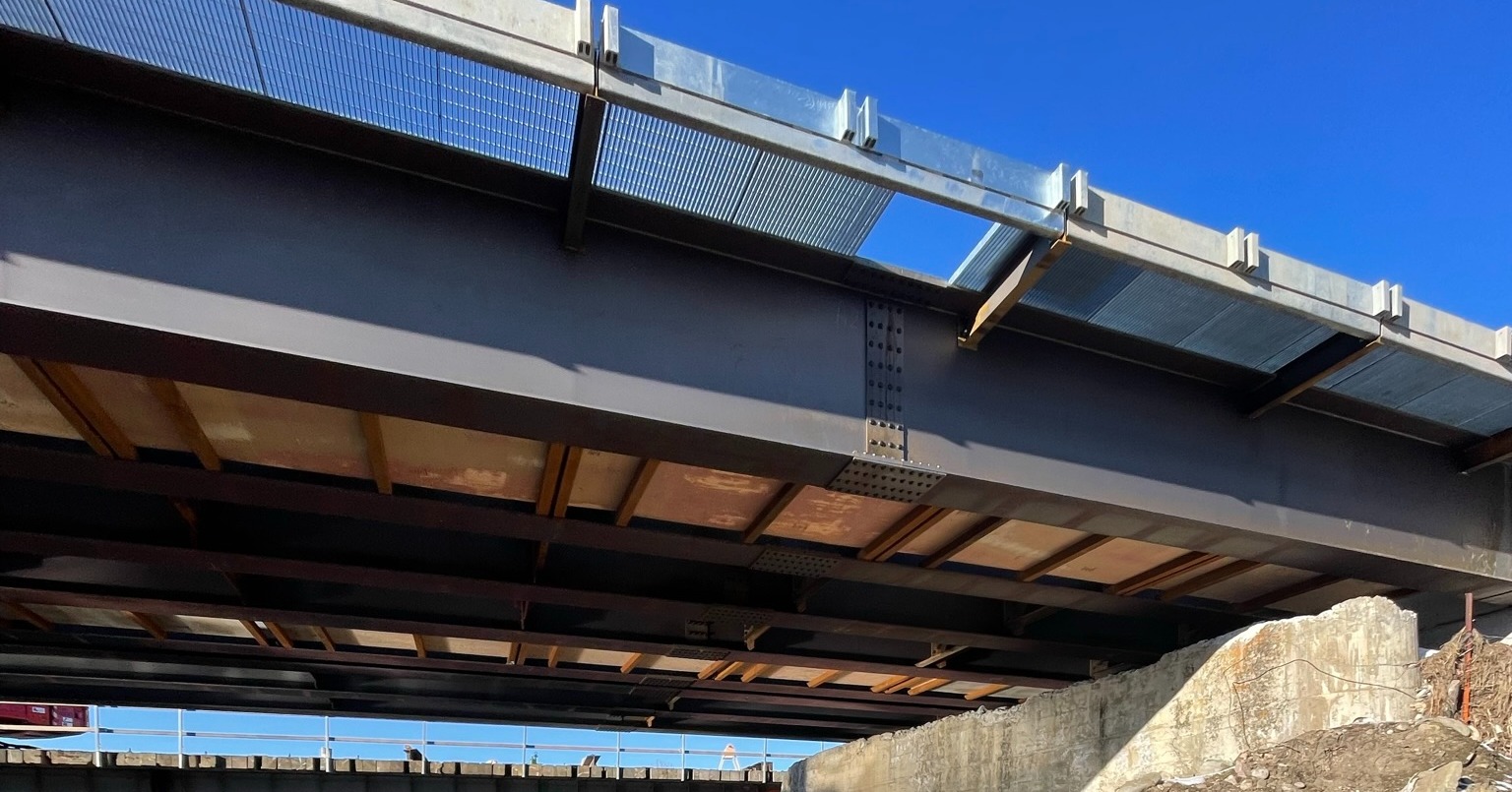
Answers to common questions about bridge grid systems, fabrication, and coordination.
This FAQ addresses questions commonly received during early project conversations about bridge grid.
Is grid decking more expensive than concrete?
On material cost per square foot, yes. We say that plainly rather than hiding it. The case for grid is built on the rest of the ledger: less field labor, shorter closures, lower dead load that can avoid superstructure strengthening, and a long service life. On many rehabilitations those items outweigh the higher deck cost; on some they do not, and it is better to find that out early.
How much lighter is a grid deck?
It depends entirely on the configuration. Open grid is dramatically lighter than a cast-in-place slab; fully filled grid is closer but still lighter. Because the comparison depends on grid depth, fill, and the slab you are comparing against, we work it out per structure rather than quoting a single figure.
Can grid decking be used on a movable bridge?
Yes, and it is the traditional choice. Open grid in particular is standard on bascule, lift, and swing spans because deck weight directly affects balance, counterweights, and machinery loads.
How is the riding surface handled on open grid?
The top of the steel is the riding surface. Skid treatment is specified as part of the deck rather than added later, and options are selected with the owner based on traffic, speed, and local practice.
Are panels galvanized?
Grid panels are commonly hot-dip galvanized, and galvanizing is coordinated as part of fabrication. Painted and other coating systems are also used where a specification calls for them.
What size are the panels?
Panels are fabricated to project dimensions. Practical limits come from shipping width and length, crane capacity at the site, and the installation sequence, so panel layout is set during detailing with the contractor's means and methods in mind.
What do you need to give a quote?
At minimum: location, bridge type, deck area, the grid system or specification being called for, and the schedule. Plans, deck details, and the relevant specification sections make the quote considerably more accurate. Our RFQ checklist article covers this in detail.
Do you provide engineering and shop drawings?
Yes. In-house engineering reviews drawings and specifications, prepares detailing and shop drawings, and works through submittals and revisions with the engineer of record and the contractor before fabrication is released.
Can you supply barriers and other bridge steel?
Yes. We fabricate custom bridge barriers, curbs, and related steel components, including project-specific configurations developed with the customer.
Do you install?
We manufacture and deliver; installation is performed by the contractor. We coordinate delivery sequencing with the installation plan and stay available for field questions through installation and closeout.
Have a question that is not here?
Call (814) 497-5001 or submit a project review. Technical questions go to the bridge team, not a call center.
Need project-specific guidance on this topic? The MCS bridge team can walk through details, drawings, and options for your structure, call (814) 497-5001.