
A brief history of the bridge-grid business and the manufacturing knowledge carried forward within MCS.
Bridge grid decking has a long history in North American bridge rehabilitation. This article summarizes that history and how legacy manufacturing knowledge continues within MCS Bridge Division.
A deck system built for rebuilding
Steel grid decking came out of a practical problem: North America built an enormous number of bridges, and eventually all of them needed new decks. Replacing a deck with cast-in-place concrete adds weight to a structure that was never designed for more, and it puts weeks of forming and curing over live traffic or open water.
A prefabricated steel grid solved both. Panels are welded up in a shop, trucked to the bridge, and set, lighter than the deck they replace, and installed in a fraction of the time.
Movable bridges came first
The earliest and most enduring application was movable spans. On a bascule, lift, or swing bridge, deck weight is not just a structural number; it drives counterweights, machinery loads, and the balance of the span. Open grid decking, with no concrete fill at all, was the lightest workable deck available and became standard practice on movable bridges, where it remains today.
Filled systems and the highway market
As the highway network aged, owners wanted the weight advantage of grid with a concrete riding surface. Half-filled and fully filled systems followed, placing concrete partway or fully through the grid depth. Later, exodermic-style decks made an unfilled grid composite with a reinforced slab above it, so the concrete worked in compression and the steel in tension.
Each step widened the market: the same fabrication logic, adapted to owners who cared more about ride quality and durability than about the last pound of dead load.
Knowledge that lives in the shop
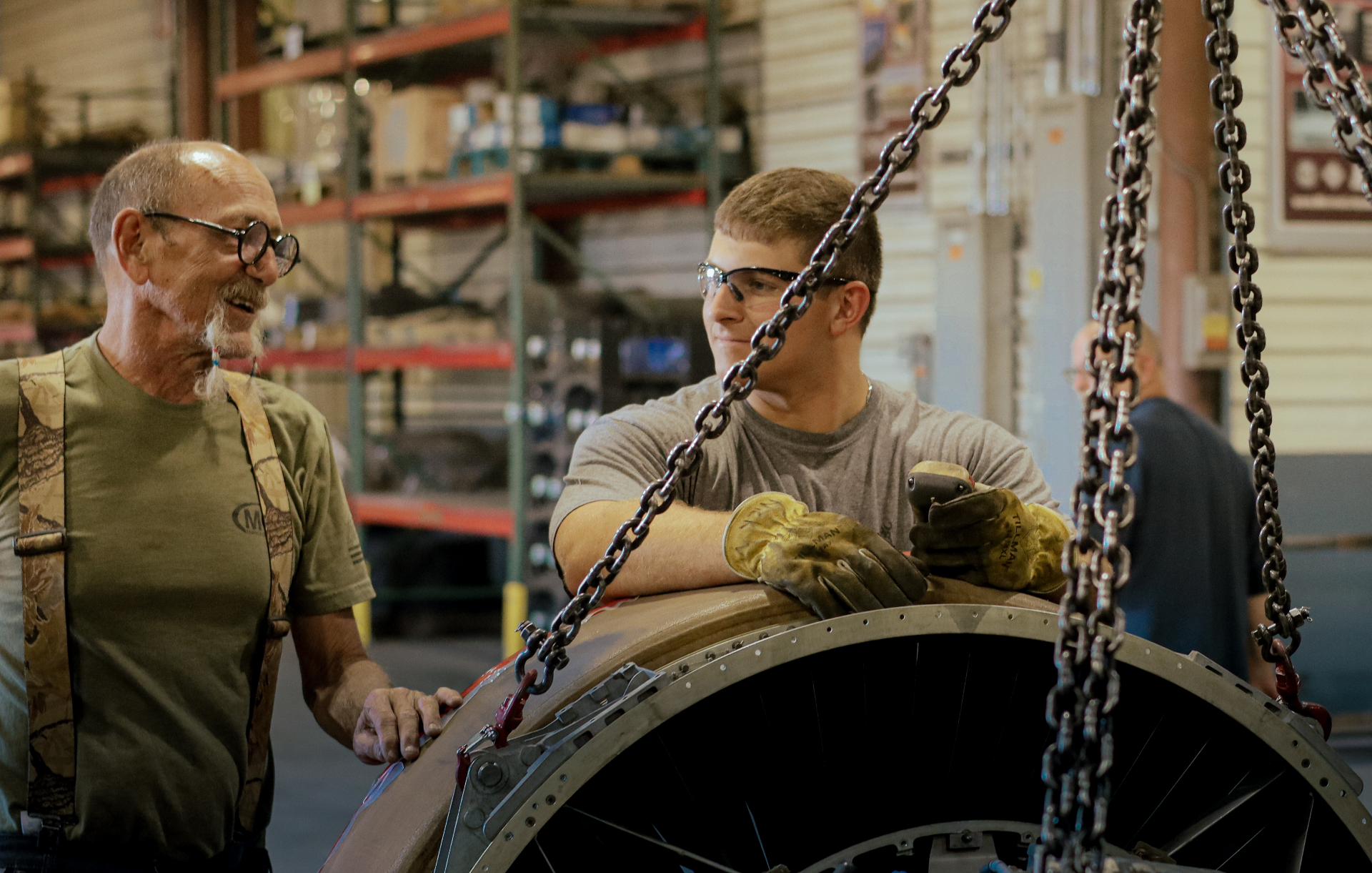
Bridge grid is a small, specialized business. The engineering is published, but the part that determines whether panels fit on a fifty-year-old bridge is not: bar arrangements that hold tolerance, weld sequences that keep panels flat, fit-up practice for skewed and curved decks, shim strategies for framing that is no longer level, and packaging that gets large panels to a constrained site undamaged.
That knowledge accumulates in people and tooling rather than in documents, which is why continuity matters more in this product line than in most.
The legacy carried into MCS
MCS Bridge Division carries forward the product knowledge, tooling, and fabrication practice of the legacy bridge grid business, now manufactured at our facility in Bedford, Pennsylvania. The systems owners and engineers have specified for decades, open, half-filled, fully filled, and exodermic-style, continue to be built to the same product logic, supported by in-house engineering and detailing.
The reason the history matters to a customer is narrow and concrete: when a fifty-year-old drawing calls out a grid system, someone here knows what it is, how it was made, and how to make it fit the bridge that is standing today.
Need project-specific guidance on this topic? The MCS bridge team can walk through details, drawings, and options for your structure, call (814) 497-5001.