
Robust Concrete Performance
Reinforced by an Integrated Steel Grid.
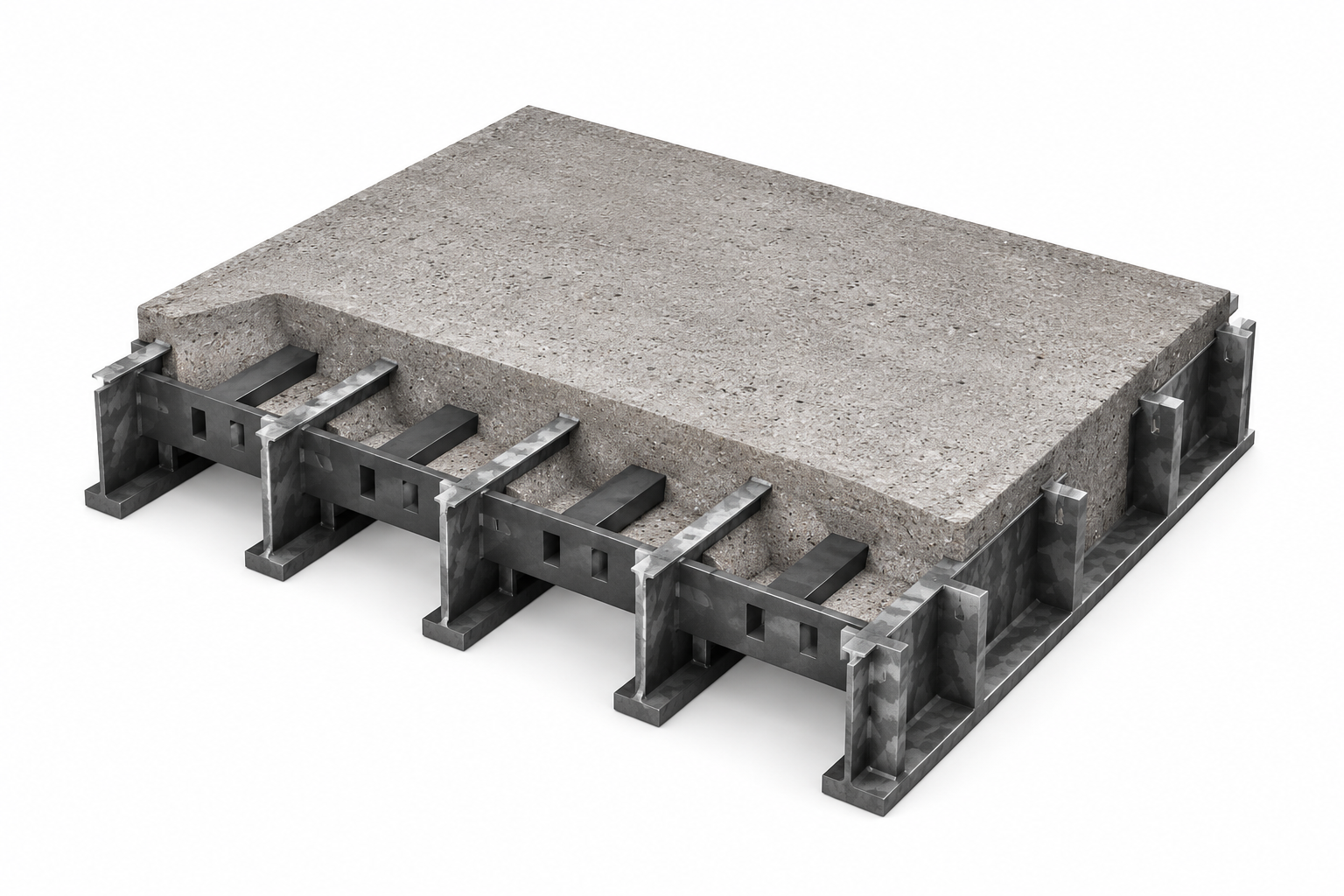
Fully filled grid decking places concrete throughout the complete depth of the steel grid, creating a durable bridge deck with a solid riding surface and dependable load distribution.
What Is Fully Filled Grid Decking?
A fully filled grid deck consists of main bearing bars, cross bars and supplemental steel members completely surrounded by concrete. Some configurations also incorporate reinforcing steel through the lower portion of the grid.
The concrete can be finished near the top of the steel grid, although a monolithic overfill is commonly added to improve riding quality, provide additional steel cover and create a sacrificial wearing surface.
When connected to the supporting structure using shear studs and concrete haunches, the deck can work compositely with the bridge's girders or floor beams.
- 01Concrete overfill
- 02Fully filled grid openings
- 03Main bearing bars
- 04Cross bars
- 05Supplemental bars
- 06Optional lower reinforcing bars
- 07Shear studs
- 08Supporting girder or floor beam
Representative Industry Specifications
- Typical deck weight
- ≈ 70–100 lb/ft²
- Common 5-inch systems
- ≈ 76–81 lb/ft²
- Typical grid depth
- ≈ 3–5¼ in
- Common concrete overfill
- ≈ 1½–2 in
- Representative clear span
- ≈ 5–8 ft
- Main bearing-bar spacing
- ≈ 6–12 in on center
- Additional reinforcement
- Optional lower reinforcing bars
- Construction methods
- Precast or cast-in-place
- Composite connection options
- Shear studs & full-depth haunches
Final deck weight, strength and span capacity depend on grid depth, steel grade, bearing-bar spacing, concrete strength and density, overfill, reinforcement, support spacing, connections and project loading.
PDF · Representative industry ranges · Not project-specific engineering.
Fully Filled Grid vs. Conventional Concrete
Fully Filled Grid Decking
- Integrated steel grid reinforcement
- Shop-fabricated panel construction
- Precast or cast-in-place options
- Reduced temporary forming
- Potential for accelerated installation
- Project-specific weight savings
Reinforced Concrete Deck
- Traditional reinforcing-bar system
- Often requires more field forming
- Primarily cast in place
- Longer placement and curing sequence
- Familiar construction process
- Weight varies by slab depth and reinforcement
The proper choice depends on bridge geometry, loading, construction access, project schedule and owner requirements.
Why Use Fully Filled Grid?
Solid Riding Surface
The concrete roadway provides a smooth and familiar surface for motorists.
Strong Load Distribution
The integrated steel grid helps distribute repetitive wheel loads throughout the deck.
High Deck Stiffness
The concrete-filled system offers greater stiffness than comparable open-grid configurations.
Durable Construction
Concrete surrounds the steel grid and creates a robust structural deck system.
Flexible Installation
Fully filled systems can be installed using precast panels or cast-in-place methods.
Accelerated Replacement
Large shop-fabricated grid panels can reduce field forming and shorten bridge closures.
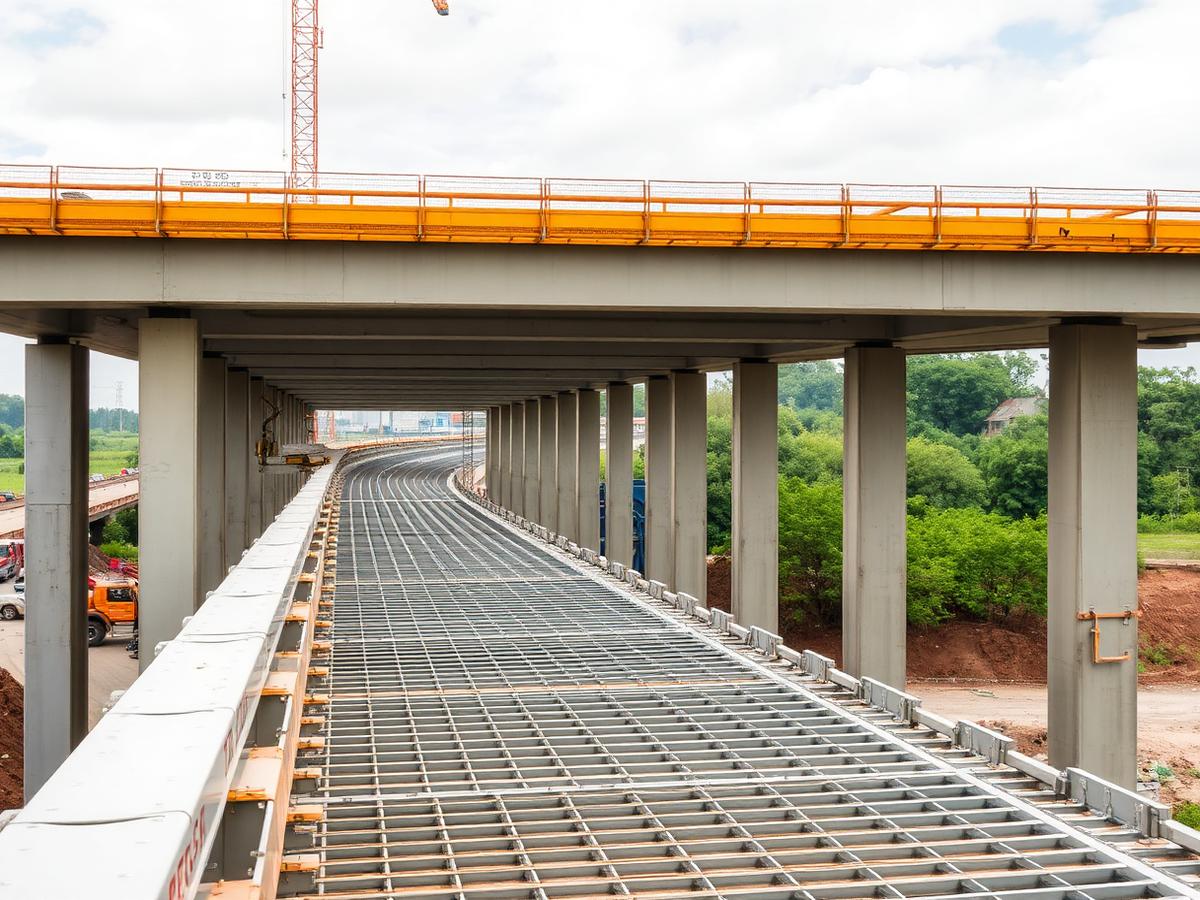
Built for Demanding Bridge and Industrial Environments
- Fixed highway bridges
- High-volume traffic routes
- Bridge deck replacement projects
- Heavy industrial floors
- Port and marine facilities
- Steel mills
- Material-handling facilities
- Waste-to-energy and tipping floors
- Heavy rolling-load applications
- Accelerated bridge replacement
- Projects where ride quality and durability outweigh minimum deck weight
Fully filled grid is often selected when a project needs the strength and load distribution of steel grid combined with a substantial concrete deck section.
Weight the Structure Can Carry. Details That Last.
Fully filled grid contains more concrete than open, half-filled and many Exodermic systems. The design team must verify that the existing girders, trusses, floor beams, bearings, foundations and movable-bridge machinery can support the finished deck weight.
Concrete cover, reinforcement, panel joints, drainage, overlays, composite connections and long-term maintenance should also be coordinated early in the design process.
Is Fully Filled Grid Right for Your Project?
Is a solid and robust concrete roadway a primary requirement?
Will the bridge carry frequent or heavy traffic loads?
Is accelerated installation important?
Can the supporting structure accommodate the finished deck weight?
Would an integrated steel-and-concrete system simplify construction?
Fully filled grid may be the best fit when durability, ride quality and dependable load distribution are more important than achieving the lightest possible deck.
Build a Deck Designed for Demanding Service.
MCS fabricates grid decking around the structural, dimensional and installation requirements of each project.