
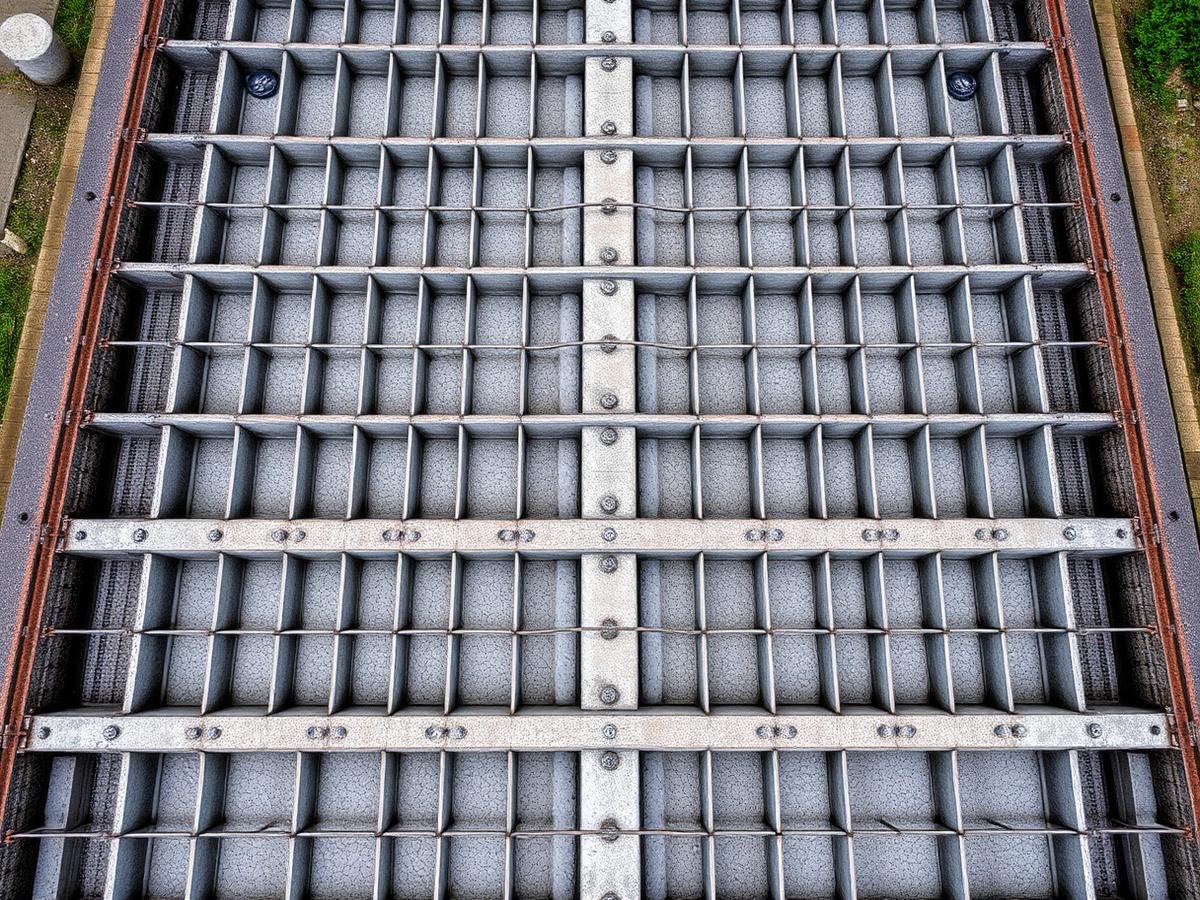
Plan for Inspection, Maintenance and Future Rehabilitation.
Grid decking offers multiple configurations that allow asset teams to balance structural weight, roadway performance, inspection access and long-term maintenance needs.
Maintenance Begins With System Selection
Deck-system decisions influence inspection access, drainage, corrosion exposure, wearing-surface repairs, future panel replacement and the condition of the supporting structure. The best system is not automatically the lightest or the heaviest, it is the system that fits the bridge's operating environment, maintenance capability and long-term asset plan.
What's on Your Plate
- 01Inspection access
- 02Drainage behavior
- 03Corrosion exposure
- 04Roadway wear
- 05Debris accumulation
- 06Fatigue
- 07Coating condition
- 08Concrete deterioration
- 09Joint condition
- 10Future replacement access
- 11Traffic disruption
- 12Movable-bridge operation
Maintenance Benefits of Grid Decking
Reduced Load on Existing Structures
Lightweight systems can reduce demand on aging bridge components.
Replaceable Panel Construction
Panelized decks may allow sections to be removed or replaced as part of future rehabilitation strategies.
Multiple Surface Configurations
Asset teams can select open steel, thin concrete or fully filled roadway surfaces around the operating environment.
Inspection Visibility
Open-grid systems can provide direct visibility through portions of the deck, although all connections still require appropriate inspection.
Accelerated Repair Potential
Prefabricated panels can reduce closure durations during future deck replacement.
Adaptable to Existing Framing
Replacement panels can be fabricated around existing bridge geometry and support conditions.
Support for Movable Bridges
Lightweight decks may reduce strain on operating machinery and support future mechanical reliability.
Reviewing an existing deck? Share the inspection findings and replacement concerns.
Plan Your ProjectMaintenance Considerations by Grid Type
Open Grid
Lowest weight, immediate drainage, direct access to steel, coating & fatigue-focused maintenance.
- Lowest deck weight
- Immediate drainage
- No concrete cracking or delamination
- Direct access to portions of the steel grid
- Coating, corrosion & fatigue attention
Exodermic®
Solid concrete roadway with composite maintenance considerations.
- Solid concrete roadway
- Reduced weight & long spans
- Precast replacement options
- Composite connection & haunch inspection
- Drainage details
Half-Filled Grid
Solid surface with reduced concrete volume and balanced maintenance profile.
- Reduced concrete volume
- Moderate deck weight
- Precast or cast-in-place repair
- Concrete overfill & form-pan condition
- Grid-to-support connections
Fully Filled Grid
Robust roadway with familiar concrete maintenance methods.
- Robust concrete surface
- High stiffness & load distribution
- Concrete cracking & delamination monitoring
- Overlay & joint leakage
- Access to embedded components
Repair, Rehabilitation or Replacement?
- STEP 01
Repair
Local steel or coating repair · Concrete patching & overlay repair · Joint & connection maintenance
- STEP 02
Partial Replacement
Panel replacement · Localized precast replacement · Phased rehabilitation w/ traffic staging
- STEP 03
Full Replacement
Open grid → filled grid · Filled grid → lighter grid · Conventional deck → grid deck · Full accelerated deck replacement
Supporting Long-Term Asset Planning
Good records make future inspection, repair planning and replacement significantly easier. Document installation dates, grid system, materials, coating system, concrete mixture, overlay type, inspection and repair history, and areas of recurring deterioration.
- Installation date & grid system
- Material grade & coating system
- Concrete mixture & overlay type
- Panel identification
- Inspection & repair history
- Recurring deterioration areas
- Traffic loading & exposure
- Fabrication records
Information Asset Teams Can Share
Even incomplete historical information can be useful. Photos, field measurements and inspection documents can help establish the next steps.
Plan Your Project- Existing plans
- Inspection reports
- Photos
- Repair history
- Grid measurements
- Areas of deterioration
- Traffic limitations
- Maintenance concerns
- Closure restrictions
- Desired service-life goals
- Future resurfacing plans
- Operating requirements for movable bridges
Common Questions
Panelized replacement may be possible depending on the deck layout, structure and condition of the supporting system.
Potentially, but the new system must be evaluated for weight, geometry, connections, loading and owner requirements.
Maintenance needs are different rather than universally lower. Open grid emphasizes steel, coating and fatigue; filled systems also require concrete and overlay maintenance.
Prefabricated replacement panels can support shorter closure strategies when planned alongside the bridge geometry and construction sequence.
Available drawings, photographs and field information may help MCS and the project engineer identify the configuration.
Plan the Next Chapter of Your Bridge's Service Life.
Share your inspection findings, existing drawings, maintenance concerns and replacement goals with MCS. Our team will help identify the grid-deck information needed to move the evaluation forward.